
The biggest mistakes when applying for overseas teaching jobs in the UK involve visa errors, weak CVs, and missed background checks. These issues can delay or even stop your application before a head teacher gets the chance to see your teaching experience.
That experience is rarely the problem for international teachers. Many already bring strong classroom skills and a wide range of teaching experience. But they can lose opportunities because they miss a document, get the timing wrong, or don’t understand what UK schools legally require. At The Coursebook, we’ve seen strong teachers lose offers over gaps that could have been fixed in an afternoon.
This guide covers the visa slips, application habits, and interview errors that cost international teachers good UK jobs. Work through them in order, and your next form will read as if it came from someone who knows the system.
Teacher Visa Mistakes: Why They Cost You UK Teaching Jobs
Plenty of applications for overseas teaching jobs in the UK fail on one visa mistake. That stops the whole application process. Home Office rules sit outside the school’s control, so a head who loved your interview still can’t hire you without the right permission in place.

Three visa errors come up again and again, and each has a fix you can start this week.
Missing the Skilled Worker Visa Deadline
The Skilled Worker visa is the main route into UK teaching jobs, but the process needs careful timing.
Your school must first issue a Certificate of Sponsorship, which you need before you can submit your visa application. Once you apply from outside the UK, the Home Office aims to decide most applications within three weeks.
That three-week target still leaves little room for delays if you’re planning to start in September. Applying in June will give you time to complete the visa process before the new school year (while also allowing for slower paperwork during the summer holidays).
Why Can Some UK Schools Not Sponsor Overseas Teachers?
Some schools can’t sponsor overseas teachers because they don’t have a Home Office sponsor licence. Since this licence is a separate registration, some smaller primary schools may not have one.
That makes checking the public register of licensed sponsors an important step before you apply. It takes only a few minutes and can tell you if a school is able to sponsor overseas teachers. Schools that have done this before may also be more familiar with the process, which can make the application smoother.
We’ve seen strong candidates spend six weeks pursuing schools that were never able to recruit from overseas. Checking the register first can help you avoid wasting that time.
Overlooking Right to Work Document Checks
Right to work checks can catch teachers out because UK schools must check your original documents before you start work. Scans or copies aren’t enough, so having the right documents ready early can prevent delays.
Now, your passport and visa are only part of those checks. You may also need an enhanced DBS check (the UK’s criminal background check) as well as a police certificate from every country where you’ve lived for 12 months or more.
Some certificates can take up to eight weeks to arrive, so starting the process early gives you more time to complete everything before your first day.
What UK Teaching Application Mistakes Do International Teachers Repeat?
International teachers often repeat the same mistakes when applying for UK teaching jobs, such as vague personal statements, missing curriculum terms, and unclear dates. With many applications to review, school leaders may move past anything unclear rather than stop to ask for more information.
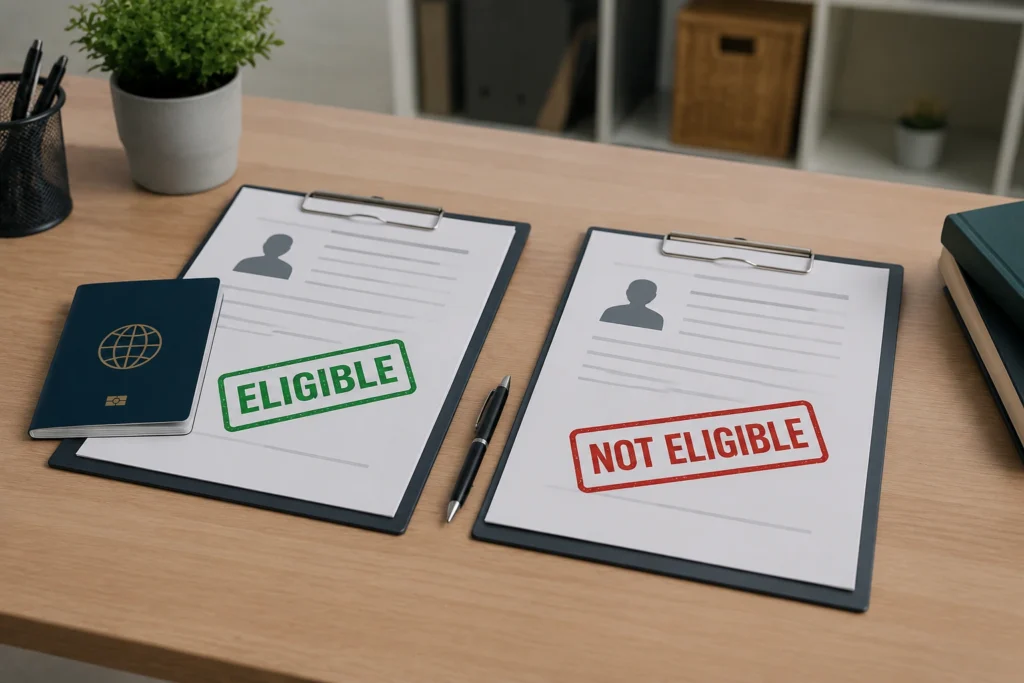
If you’ve rewritten your personal statement and still haven’t heard back, it may be worth checking the details rather than changing the opening again. Start with these four common problem areas:
- Vague Personal Statements: Give schools something concrete to work with by naming the year groups you taught, the subjects you covered, and the results your students achieved. A statement such as “Year 9 English, 78% achieved grade 4 or above” tells a head teacher far more than a broad description of your teaching experience.
- Unproven Teaching Qualifications: Your qualifications may be familiar in your home country, but a UK school still needs to understand how they relate to Qualified Teacher Status (QTS). Briefly explain what each qualification involved and how it compares with the requirements for teaching in the UK.
- Missing Curriculum Terms: UK schools look for terms such as National Curriculum, Key Stage, GCSE, and Ofsted when reviewing applications. If you’ve taught English abroad, connect your experience to these terms by explaining the year groups, subjects, and curriculum levels you have covered.
- Inconsistent Dates: Your CV, application form, and references should tell the same career story. Check each date carefully and list your work and study history by month, especially if there are gaps that a recruiter may need to clarify.
So before you submit your application, read it as if you were seeing it for the first time. Each claim should give the reader something specific, such as a result, date, year group, qualification, or exam board.
International School Interviews Trip Up Many Overseas Teachers
Knowing the common mistakes can help you prepare for an international school interview. Once your paperwork is in order, many schools assess candidates through both an interview and a lesson observation, so preparing for the questions is just as important as planning the lesson. Use the examples below to spot common interview slips and see what you can do differently.
| Interview slip | What the panel hears | Better move |
|---|---|---|
| Describing only your old system | You can’t adapt quickly | Map one lesson to Key Stage 3 |
| No safeguarding example | You’re a risk | Name a concern you reported |
| No questions at the end | You’re not that interested | Ask about cover and staff retention |
These examples all point to the same issue: the panel needs evidence that you can work effectively in a UK school. Safeguarding often gets its own score during the interview. That’s why you should practise those answers out loud and prepare two specific examples rather than giving a long overview of your teaching career.
Overlooking Agency Support When You Chase Overseas Teaching Jobs
Agency support and references need as much attention as your visa. Many teachers use an agency only to find job listings, but the right consultant can also help you understand which schools are worth applying to and what they need from overseas candidates.

That local knowledge can save you time during the application process. A consultant who regularly fills international teaching roles may know which schools have sponsor licences, offer relocation support, or have hired teachers from your country before. That information can help you focus your applications instead of spending time on schools that may not be a good fit.
Teachers we place from South Africa often weigh teaching jobs abroad in South Korea and Hong Kong first (they know the pay scales already). Bottom line: you know your classroom better than any consultant, so hand over the detail that sells it.
Once you’ve found suitable roles, don’t let references hold up the next stage. In our fifteen years of placing staff, we’ve found that references have delayed more offers than visas. UK schools usually ask for two referees, including your current head, so contact them early and tell them which roles you’re applying for.
The same care should apply to your personal documents. Before uploading a passport scan to a job board, check its privacy policy and find out how your information will be used. Boards that clearly name the school also give you a better idea of where your application is going.
Teaching Careers UK: Building a Stronger One Starts Here
Many UK teaching applications fail because of timing and paperwork rather than classroom ability. Even experienced overseas teachers can lose an opportunity because of a missed date, missing document, or incomplete reference. Checking these details before you apply can help keep your application moving.
You don’t need to fix everything at once. Start with one gap from this guide, sort it out, and then check the next part of your application. A few practical changes can be more useful than repeatedly rewriting the same CV.
The Coursebook lists international teaching opportunities and provides guidance for overseas-trained teachers moving to the UK. If you need help with your visa timeline, CV, or referees, contact us before you send your next application.